Butterfly Embroidery Seamless Patterns: A Comprehensive Evaluation
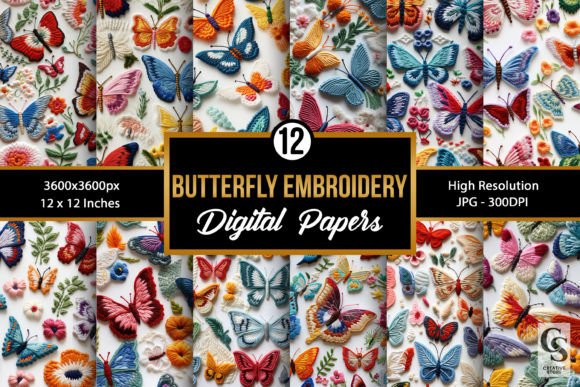
In the realm of digital crafting and design, finding high-quality assets that bridge the gap between traditional aesthetics and modern production methods is essential. Butterfly Embroidery Seamless Patterns represent a specific category of digital resources designed to replicate the intricate beauty of hand-stitched embroidery using butterfly motifs. These patterns are not merely images; they are functional tools intended for users who require repeatable, high-resolution designs for various commercial and personal projects.
This evaluation explores the utility of a collection typically comprising 12 distinct digital papers featuring these motifs. By analyzing the technical specifications, application scenarios, and practical limitations, this guide aims to help creators determine if this asset pack aligns with their specific workflow and creative goals.
Understanding the Asset Structure
The core value of this collection lies in its format and resolution. The package includes 12 unique seamless patterns, all contained within a single zip file for streamlined organization. Each file is provided as a high-resolution JPG image at 300dpi, with dimensions of either 3600 x 3600 pixels or 12″ x 12″.
The 300dpi specification is a critical factor for anyone intending to print these designs. Standard screen resolution (72dpi) is insufficient for physical media, often resulting in pixelation when scaled up. By providing files at 300dpi, the creator ensures that the fine details of the embroidery stitches—such as thread texture, color gradients, and outline sharpness—remain crisp even when printed on large formats. This makes the pattern suitable for professional-grade output rather than just digital display.
Primary Applications and Use Cases
The versatility of these digital papers allows them to serve multiple functions across different industries. The seamless nature of the pattern means it can be tiled infinitely without visible breaks, creating a continuous background. This characteristic is particularly valuable for the following applications:
- Stationery and Greeting Cards: The delicate nature of butterfly motifs pairs well with wedding invitations, birthday cards, and holiday stationery. The embroidery aesthetic adds a tactile feel to paper goods without the actual cost of physical stitching.
- Scrapbooking and Planners: Digital scrapbookers utilize these files to create backgrounds that mimic fabric textures. Similarly, planners and journals benefit from the decorative borders and full-page backgrounds that organize content aesthetically.
- Gift Wrapping and Packaging: For small business owners or individuals creating custom gifts, these patterns offer an immediate way to produce branded wrapping paper. The high resolution ensures the design looks premium when wrapped around boxes of varying sizes.
- Digital Wall Art and Backgrounds: The 12x12 inch size is ideal for creating digital wallpapers for tablets or computers. When scaled appropriately, these images can also serve as the base for wall art prints.
- Physical Product Customization: The files are compatible with Direct-to-Garment (DTG) printing, sublimation, and vinyl cutting machines. Users can apply these patterns to tumblers, notebook covers, and tote bags, effectively turning a flat digital file into a textured physical product.
Evaluating Benefits and Practical Considerations
When considering the acquisition of Butterfly Embroidery Seamless Patterns, several benefits stand out. The primary advantage is efficiency. Creating a realistic embroidery texture from scratch requires significant time and artistic skill. Acquiring a pre-made set of 12 variations allows a designer to focus on composition and layout rather than texture creation. Furthermore, the consistency in quality across all 12 files ensures a cohesive look for multi-page projects like journals or invitation suites.
However, there are tradeoffs and considerations that potential buyers must weigh. The most significant limitation is the file format. While JPG files are universally compatible, they are lossy compressed formats. If a user intends to edit the individual threads or alter the colors significantly, a vector format (like SVG or AI) would be superior. With JPGs, the design is raster-based, meaning scaling beyond the original resolution will degrade quality. Therefore, these files are best used at or below their native 3600px dimension.
Another consideration is the aesthetic style. Embroidery patterns have a specific "soft" look characterized by slight irregularities and thread-like strokes. While this appeals to those seeking a handmade, rustic, or vintage vibe, it may clash with designs requiring a clean, minimalist, or hyper-modern geometric style. Users should verify that the specific butterfly motifs included match the mood of their project before purchasing.
Situational Fit: When to Choose This Pattern
This asset pack is a strong fit for crafters and designers who prioritize texture and warmth in their work. It is particularly recommended for:
- DIY Enthusiasts: Individuals creating home decor, custom notebooks, or personalized gifts who need high-quality textures without access to industrial printing equipment.
- Small Business Owners: Entrepreneurs selling digital planners, printable stationery, or physical merchandise like tumblers and stickers who need reliable, legal-to-use assets.
- Hobbyist Scrapbookers: Those looking to digitize their physical albums or create new layouts with a consistent theme.
If your goal is to create a project that feels organic, soft, and artisanal, the embroidery aesthetic provides a natural solution. The inclusion of 12 variations offers enough diversity to prevent visual monotony in larger projects, such as a full book cover or a series of greeting cards.
Alternatives and Comparison Points
While this collection is robust for general crafting, it may not be the optimal choice for every scenario. Designers working on large-scale commercial advertising banners might find the 12x12 inch resolution limiting, even at 300dpi, if the final print size exceeds standard poster dimensions. In such cases, sourcing vector graphics or higher-resolution raw photography would be more appropriate.
Additionally, users who require fully editable layers (e.g., isolating a single butterfly to change its color independently) will find JPG files restrictive. For these needs, purchasing a layered PSD file or a vector bundle containing separate butterfly elements would be a better investment. Similarly, if the project demands a photorealistic approach rather than a stylized illustration, stock photography of real butterflies might yield a more authentic result than a digital embroidery simulation.
Decision-Making Insights
To determine if Butterfly Embroidery Seamless Patterns aligns with your needs, consider the following checklist:
- Output Medium: Are you primarily printing? If yes, the 300dpi resolution is sufficient for most consumer and small-business applications.
- Editing Requirements: Do you need to manipulate the individual stitches? If so, JPGs may limit your flexibility.
- Aesthetic Consistency: Does the "embroidered" look complement your brand or project theme?
- Volume Needs: Do you need more than 12 variations? If your project requires hundreds of unique backgrounds, this pack may only serve as a starting point.
Ultimately, this collection represents a practical tool for bridging the gap between digital convenience and traditional craft aesthetics. By understanding its technical constraints and leveraging its strengths in textural applications, users can effectively incorporate these patterns into a wide array of creative endeavors.