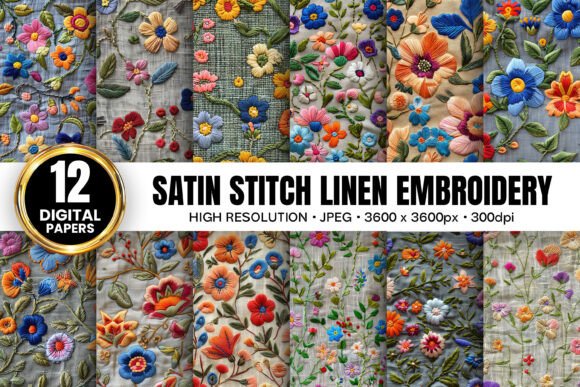
Satin Stitch Linen Embroidery Patterns for Creators
The tactile allure of linen fabric, combined with the sleek sheen of satin stitch embroidery, has long been a favorite among textile enthusiasts. However, capturing that specific texture digitally requires more than just a standard photograph; it demands high-fidelity reproduction that honors the weave and the thread. This is where Satin Stitch Linen Embroidery Patterns become an essential asset for modern creators. Whether you are designing custom stationery or developing a new line of packaging, having access to authentic textures can elevate a project from a simple draft to a polished, professional product.
Understanding the value of these digital resources begins with recognizing the unique characteristics of the satin stitch technique. Unlike backstitch or cross-stitch, which rely on visible gaps between threads, satin stitch creates a smooth, continuous surface that mimics the look of liquid silk or velvet. When this effect is applied to a linen background, the result is a sophisticated interplay of rough and smooth textures. For professionals in marketing, branding, and design, integrating these patterns allows for immediate visual communication of quality and craftsmanship without the need for physical sampling.
Maximizing Quality with High-Resolution Digital Assets
In the realm of digital design, resolution is not merely a technical specification; it is the foundation of credibility. The collection of Satin Stitch Linen Embroidery Digital Paper provided here addresses the common frustration of pixelation when images are scaled up for print. Each file is delivered at 300 DPI, ensuring that every thread and fiber remains crisp whether viewed on a screen or printed on a large format poster. The dimensions of 3600 x 3600 pixels (or 12″ x 12″) offer sufficient detail for close-up inspection while maintaining manageable file sizes for workflow efficiency.
This level of quality is particularly critical for entrepreneurs who use their designs for tangible products. Consider a small business owner creating custom gift wrap. If the pattern used is low-resolution, the final product will appear blurry and cheap upon unboxing, potentially damaging the brand's reputation. By utilizing high-resolution files, the intricate details of the embroidery stand out, conveying a message of luxury and attention to detail before the customer even touches the item. The consistency across all 12 included papers ensures that your entire product line maintains a cohesive, professional aesthetic.
Practical Applications for Diverse Creative Needs
The versatility of these digital papers extends far beyond simple decoration. They serve as functional tools that streamline various creative processes. For instance, graphic designers often struggle to find backgrounds that feel organic yet structured. These patterns provide an instant solution for creating depth in layouts. When used as a background for wall art or digital wallpapers, the texture adds a layer of realism that flat colors cannot achieve. This helps in creating environments that feel warm and inviting, which is a key psychological factor in user engagement.
For educators and hobbyists, these assets simplify the creation of learning materials and personal projects. A teacher preparing a lesson plan on textile arts can incorporate these images to demonstrate stitching techniques clearly. Similarly, scrapbookers can use the patterns to create thematic pages that evoke a sense of nostalgia and handcrafted charm. The ability to download 12 distinct variations in a single ZIP file means users can experiment with different textures without needing to source multiple separate products, saving both time and money.
- Wrapping Gifts: Transform plain paper into a premium experience by applying these textures to labels or wrapping sheets.
- Greeting Cards Designing: Add a touch of elegance to invitations and cards, making them memorable keepsakes.
- DIY Crafts Stationery: Create personalized planners and journals that look professionally bound.
- Backgrounds Wallpapers: Enhance digital presentations or website headers with rich, textured backdrops.
- Crafting Planners Journals: Design covers that inspire organization and creativity.
- Creating Invitations: Elevate wedding or event invites with sophisticated, fabric-inspired visuals.
- Custom Apparel Prints: Use the patterns as inspiration or direct prints for t-shirts and tote bags.
- Textile and Fabric Design: Reference the stitch density and color palette for actual fabric production.
- Scrapbooking Projects: Preserve memories with pages that have a tactile, artistic feel.
- Eye-catching Wall Art: Print large-scale versions for home decor that adds character to any room.
- Tumbler Wraps: Apply designs to drinkware for a unique, branded look.
- Book Covers Junk Journal: Give notebooks and journals a rustic, artisanal appearance.
Strategic Benefits for Professionals and Hobbyists
One of the most significant advantages of using Satin Stitch Linen Embroidery Patterns is the reduction in production time. In a commercial setting, every hour saved translates to increased productivity. Instead of spending days photographing fabrics, lighting them correctly, and editing out imperfections, designers can instantly apply these high-quality textures to their mockups. This speed allows for rapid prototyping, enabling businesses to test concepts quickly before committing to expensive manufacturing runs.
Furthermore, these digital assets support better decision-making. When presenting a design concept to a client, showing a realistic representation of the final product is crucial. A flat image might be convincing, but a textured background that simulates the feel of linen and the shine of satin stitch provides a much stronger argument for the design's viability. It bridges the gap between imagination and reality, helping stakeholders visualize the end result with greater clarity.
For freelancers and bloggers, these patterns offer a way to enhance content presentation. Blog posts about crafting, DIY tutorials, or fashion trends often suffer from a lack of visual appeal. Integrating these textures into headers, sidebars, or featured images can increase reader engagement and make the content feel more curated and professional. It signals to the audience that the creator values aesthetics and quality, which builds trust and authority in their niche.
Navigating Limitations and Best Practices
While these digital products offer immense value, it is important to approach them with a clear understanding of their nature. As digital files, the actual colors may vary slightly depending on monitor settings and the specific printer used. This variation is inherent to the difference between RGB (screen) and CMYK (print) color models. Users should be aware that the vibrant greens or deep blues seen on a high-definition display might appear slightly muted on certain paper stocks. To mitigate this, it is advisable to perform a test print before mass production, especially for projects where color accuracy is paramount.
Additionally, the scale of the pattern matters. While the 3600 x 3600 pixel resolution is excellent for most applications, extremely large formats might require specific scaling considerations to avoid repeating patterns that look artificial. Users should experiment with tiling options in their design software to ensure the texture flows naturally across the intended medium. Comparing different patterns within the set can also help determine which texture best suits the specific mood of a project, as some may lean more towards rustic while others appear more formal.
Empowering Creativity Through Accessibility
Ultimately, the goal of providing Satin Stitch Linen Embroidery Digital Paper is to democratize access to high-quality design elements. Historically, such textures were reserved for those with access to professional photography studios or expensive fabric libraries. By offering these resources as downloadable digital files, the barrier to entry is lowered significantly. This empowers small business owners, students, and hobbyists to compete on a level playing field with larger corporations.
The inclusion of 12 distinct variations ensures that there is something suitable for every style preference, from subtle and understated to bold and dramatic. This variety encourages experimentation, allowing users to mix and match textures to create unique compositions. Whether you are designing a wedding invitation suite, a corporate brochure, or a personal junk journal, the ability to choose the perfect linen texture can be the deciding factor in creating a design that resonates emotionally with the viewer.
By focusing on practical utility and high standards, these digital papers serve as more than just decorative elements; they are tools for efficiency and expression. They allow creators to focus on their core ideas rather than struggling with technical limitations, fostering an environment where creativity can flourish. As the demand for personalized and handmade aesthetics continues to grow in the digital age, having reliable, high-quality textures like these becomes increasingly vital for anyone looking to make a lasting impression through their work.